Encinitas ADU Regulations and Smart Design Ideas
November 27, 2025
November 27, 2025
Thinking about adding an ADU to your Encinitas home? You are not alone. Homeowners across North County are exploring ADUs to host family, create rental income, or add flexible space without moving. In this guide, you will learn the rules that shape ADUs in Encinitas, smart design ideas that fit our coastal climate, and a clear path to getting permitted with fewer surprises. Let’s dive in.
California law makes most ADUs a ministerial approval, which means cities must review them against objective standards without discretionary hearings. The state limits how cities handle parking, setbacks, and impact fees, which helps many projects pencil. Impact and connection fees must be proportionate to the ADU’s size, and parking is often reduced or not required under specific conditions. For most ADUs, cities cannot require owner occupancy.
ADUs come in several forms: detached cottages, attached additions, garage conversions, and Junior ADUs (JADUs). A JADU is created within the existing walls of a single-family home and may be up to 500 square feet. JADUs have an owner-occupancy requirement, meaning you must live in either the main home or the JADU. ADUs outside the JADU category generally do not require owner occupancy.
Much of Encinitas lies inside the Coastal Zone, which can add coastal review to your process. Some projects may require a Coastal Development Permit or verification that the work is consistent with the City’s Local Coastal Program. Coastal rules can affect placement, height, and visual impacts, and certain locations may be subject to appeal rights. Plan for this early to keep your schedule realistic.
State rules often allow reduced side and rear setbacks for detached ADUs, while local code sets objective height and coverage standards. Expect one-story height limits for many detached units, though your zoning and site may allow variations. Always verify Encinitas’s current numeric standards before finalizing plans.
California limits when cities can require new parking for ADUs, especially near transit or when converting existing space. Still, site circulation and safety matter, and some lots will need creative solutions like tandem spaces or shared driveways. If you remove existing covered parking to build an ADU, you may need to replace it on-site unless a state exception applies.
Plan early for water, sewer, electric, and gas. ADUs can share or add service, but panel upgrades and meter configurations are common. Impact and connection fees must scale to unit size, and very small units may see reduced costs. If your property uses septic, you will need to confirm capacity and any required upgrades.
State law sets timelines for ministerial reviews, but real-world schedules vary. Expect several weeks to a few months for plan check, longer if coastal or geotechnical studies are needed.
Encinitas includes hillside, canyon, and coastal bluff areas. In Wildland-Urban Interface zones, you will need defensible space and ember-resistant construction features. Steep or bluff-top sites can trigger geotechnical studies and stricter setbacks. Plan drainage carefully, especially on coastal and sloped lots.
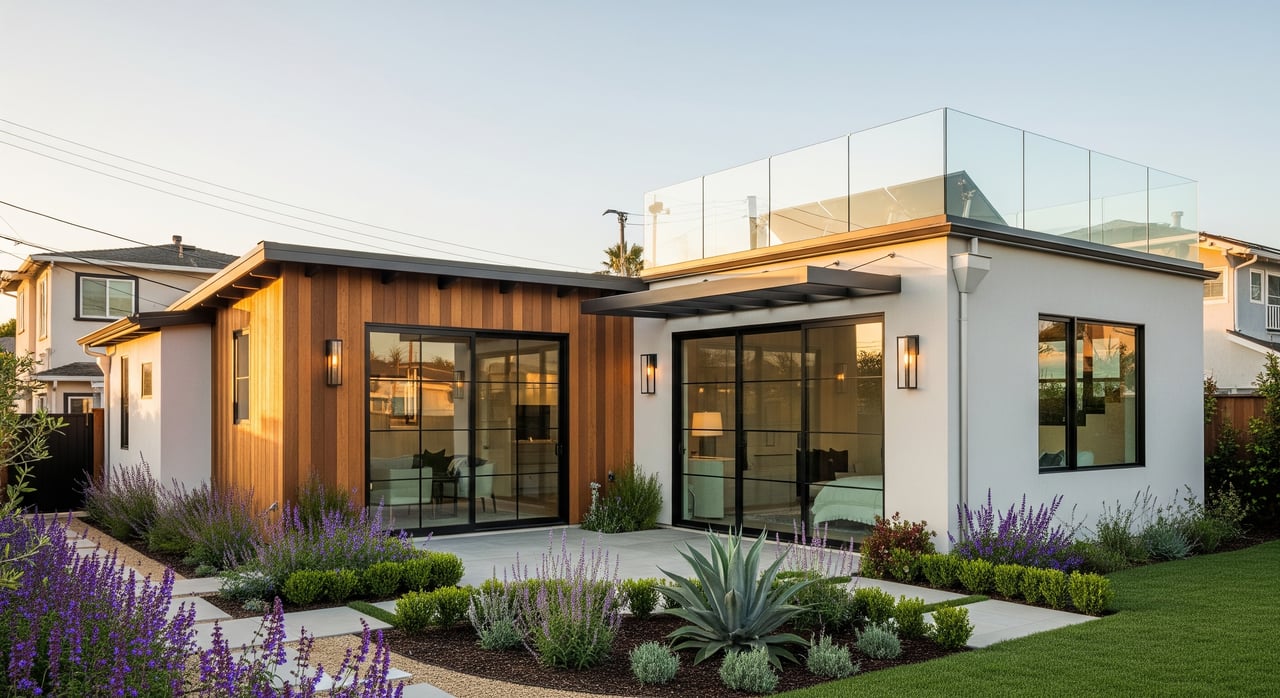
Lean into Encinitas’s mild climate. Add sliders that open to a small patio, shade the west exposure, and include ceiling fans for comfort. Design cross-ventilation with operable windows on opposite walls to cut reliance on HVAC.
Specify corrosion-resistant fasteners, rot-resistant cladding, and marine-grade hardware where exposure is high. Favor simple rooflines that accept solar and resist coastal winds. Choose finishes that weather gracefully with salt air.
Use window placement, trellises, and landscaping to maintain privacy between the main home and the ADU. Create separate entries and consider a small fenced courtyard. Locate outdoor living areas to minimize sightlines into neighboring yards.
Single-level layouts, step-free entries, wider doorways, and curbless showers make your ADU more flexible over time. These touches appeal to multigenerational households and future tenants. Keep thresholds low and lighting layered for safety and comfort.
Use permeable paving to manage runoff and drought-tolerant, salt-tolerant planting for coastal streets. Pocket gardens, vertical planters, and compact patios make small yards feel generous. Consider rooftop decks only where allowed and where privacy and structural capacity make sense.
Build costs vary based on scope, finishes, and site complexity, especially with coastal or geotechnical needs. Many owners see strong value from rental income and overall property appeal, though appraisals depend on unit size and local rental rates. Get multiple bids and set a contingency for coastal or utility upgrades.
Common options include cash, HELOCs, home equity loans, and construction-to-perm financing. Some lenders consider projected ADU income during underwriting. Check for state or local programs that support small, affordable ADUs, and consult your lender early.
Long-term rentals offer stable income and follow standard landlord-tenant laws. Short-term rentals may require registration and can be limited by local rules. Insurance and taxes will change when you add rental use, so speak with your insurance agent and tax advisor.
An ADU can be a graceful way to grow how you live, earn, and host in Encinitas, but details matter. Early guidance on siting, privacy, materials, and compliance pays off during plan check and construction. If you are weighing rental models, valuation, or design direction, a design-forward advisor can help you make decisions that look good and add value.
If you would like a private, design-led conversation about ADU potential, presentation, and market impact, connect with Jennifer Delonge. Request a private Market-Ready consultation.
Partner with Jennifer DeLonge for a creative, insightful, and deeply personal real estate experience. She'll expertly guide you every step, delivering exceptional results. Contact Jennifer today to begin your journey.
JENNIFER DELONGE | CA DRE# 02241130
Douglas Elliman 853 Camino Del Mar, Ste 100 Del Mar, CA 92014