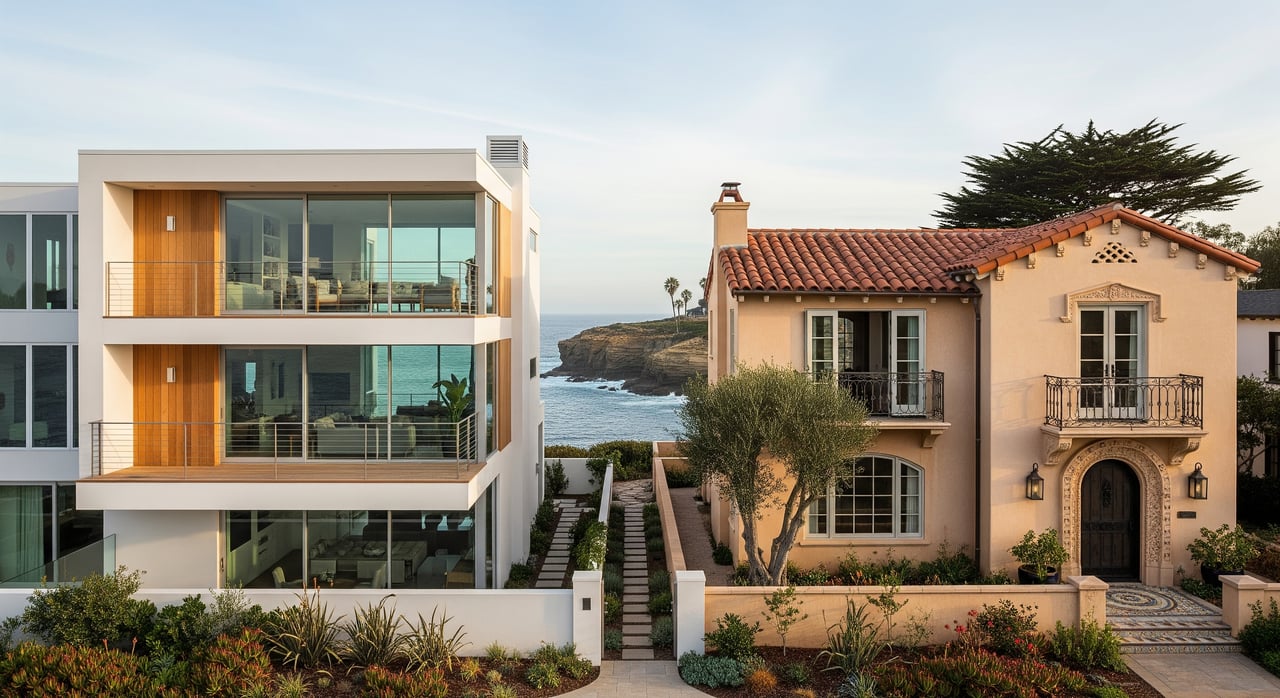
La Jolla New vs Renovated Homes: Making the Right Choice
January 1, 2026
January 1, 2026
Is your ideal La Jolla home a brand-new, modern build or a beautifully renovated classic with character? The answer depends on your lot, timeline, budget, and the way La Jolla’s coastal rules shape what you can do. You want a choice that protects value, fits your lifestyle, and makes sense in this view-driven market. This guide breaks down the real tradeoffs so you can move forward with clarity. Let’s dive in.
La Jolla is a high-demand coastal market where ocean views, indoor-outdoor living, and walkable-village access often lead buyer wish lists. Properties that enhance view corridors and outdoor spaces tend to see stronger interest. Lot size, topography, and setback rules can limit what you can add or rebuild, which directly affects feasibility and value. Neighborhood context matters too, since nearby sales anchor appraisals and buyer expectations.
Your scope is the biggest cost driver. Cosmetic updates can take weeks to a few months. Major renovations that include structural changes or system upgrades often run several months to a year. A teardown and new build commonly takes 12 to 24 months from permit to completion in coastal Southern California, with site complexity and utility work extending timelines.
Site conditions in La Jolla play an outsized role in cost. Steep slopes, bluff proximity, soils, and access can require substantial engineering, retaining walls, and stormwater controls. High-end finishes, custom millwork, and outdoor amenities like pools and large decks add both time and budget. Plan for permit, impact, and mitigation fees in your financial model.
Much of La Jolla is within the California Coastal Zone. Projects may require Coastal Development Permits or local coastal approvals, which can add steps, community input, and time. Coastal Act policies can influence your home’s bulk, scale, setbacks, and certain site changes.
City of San Diego zoning, floor area ratios, and any neighborhood overlays can limit the build envelope. Local groups, including the La Jolla Community Planning Association, are active in design and planning discussions. Near bluffs, expect geotechnical studies and setback rules aimed at stability and erosion management.
For substantial projects, California Building Code and Title 24 energy standards apply, and CALGreen sets minimum sustainability measures. If you are considering an accessory dwelling unit, state ADU laws help, but Coastal Zone and local zoning still shape what is possible on a given lot. Early feasibility is essential: coastal and permit scoping, a geotechnical assessment, and a pre-application meeting can save months.
In a premium market, well-executed work can unlock meaningful value, but the return is highly sensitive to view preservation, location, and design quality. Renovations that modernize kitchens, primary baths, and outdoor living often resonate with buyers and can deliver attractive returns. Updating systems for energy efficiency and comfort is another strong signal.
New construction can command top-of-market pricing when design, finishes, and scale align with nearby comparables. The risk is overbuilding for the block, which can challenge appraisals and slow absorption. If the lot and regulations limit meaningful expansion, a focused renovation can be the smarter path.
If you are buying with work in mind, renovation loans such as FHA 203(k) or Fannie Mae HomeStyle can combine purchase and renovation costs. For ground-up projects, construction or construction-to-permanent loans are common and usually require larger down payments and interest-only draws during the build. Cash is often used in the luxury segment to reduce timing risk.
Appraisers lean on recent sales of similar homes nearby. Renovated properties tend to appraise predictably when improvements match neighborhood norms. One-off custom builds may be harder to value if the immediate area lacks comparable new construction.
Insurance and taxes matter too. Coastal properties can carry higher insurance costs, and separate flood or earthquake coverage may be relevant depending on location and risk profile. In California, significant new construction or a sale often triggers reassessment for property taxes. Discuss specifics with the County Assessor and your insurance advisor before you commit to a path.
Choose renovation when the structure has good bones and systems can be modernized without rebuilding the envelope. If the lot or zoning prevents a larger footprint, put dollars into high-impact areas like kitchens, primary baths, and outdoor spaces. Renovation also shines when you want to retain architectural character or mature landscaping that buyers value.
If time-to-market is a priority, renovation can help you hit a favorable window and limit carrying costs. This route also reduces approval risk compared to a full teardown, especially in sensitive coastal or bluff-adjacent zones.
New construction makes sense when the existing home is functionally obsolete or has costly structural issues. If your site allows a better footprint, adding bedrooms, a modern garage, or large outdoor living areas can shift the property into a higher value tier. A new build also delivers top-tier energy performance, seismic resilience, and integrated smart-home systems that are difficult to retrofit.
If your goal is a contemporary, indoor-outdoor lifestyle without compromise, and you can support the timeline and financing, a new build can produce a standout asset in the right La Jolla micro-neighborhood.
Start with feasibility, not finishes. In La Jolla, the smartest plan begins with coastal and zoning clarity, a geotechnical review if slope or bluff is involved, and a realistic scope tied to nearby comparables. From there, align design, timeline, and financing to your lifestyle goals and risk tolerance.
If you want a design-forward, outcome-driven path, partner with a trusted advisor who understands both the regulatory landscape and the aesthetics that drive buyer response. For a private, tailored plan and curated execution, request a private Market-Ready consultation with Jennifer Delonge.
Partner with Jennifer DeLonge for a creative, insightful, and deeply personal real estate experience. She'll expertly guide you every step, delivering exceptional results. Contact Jennifer today to begin your journey.

JENNIFER DELONGE | CA DRE# 02241130
Douglas Elliman 853 Camino Del Mar, Ste 100 Del Mar, CA 92014